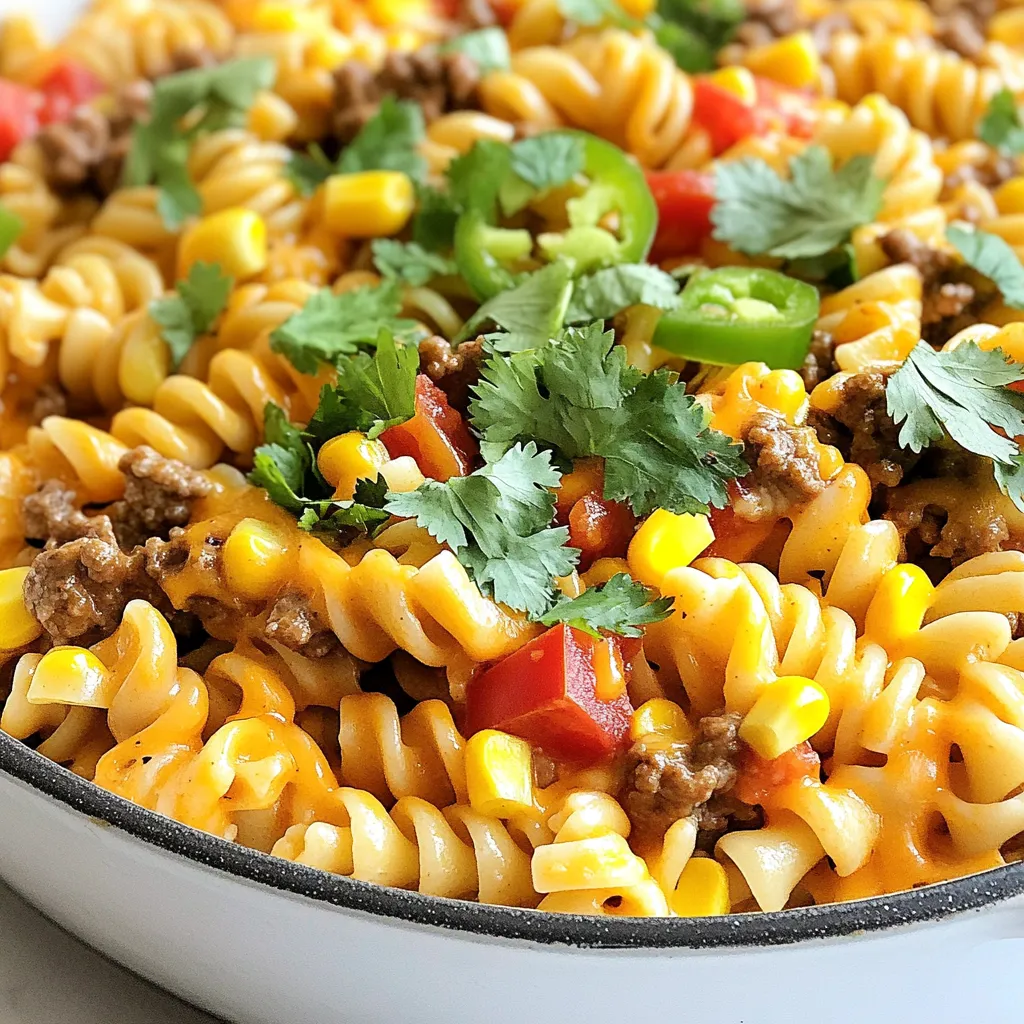
Craving a quick and delicious meal? This Cheesy Taco Pasta Skillet recipe is your answer! Packed with flavor and made in one pan, it’s perfect for busy weeknights. In just a few steps, you’ll enjoy creamy pasta, seasoned meat, and colorful veggies. Join me as we explore this simple dish that’s sure to please your family. Let’s get cooking and turn your dinner into a fiesta!
Why I Love This Recipe
- Quick and Easy: This recipe comes together in just 30 minutes, making it perfect for busy weeknights.
- One-Pan Wonder: Cooking everything in a single skillet means less cleanup and more time to enjoy your meal.
- Flavor-Packed: The combination of taco seasoning, cheese, and fresh veggies creates a deliciously satisfying dish.
- Customizable: Easily modify ingredients to suit your taste, whether you prefer different proteins or additional toppings.
Ingredients
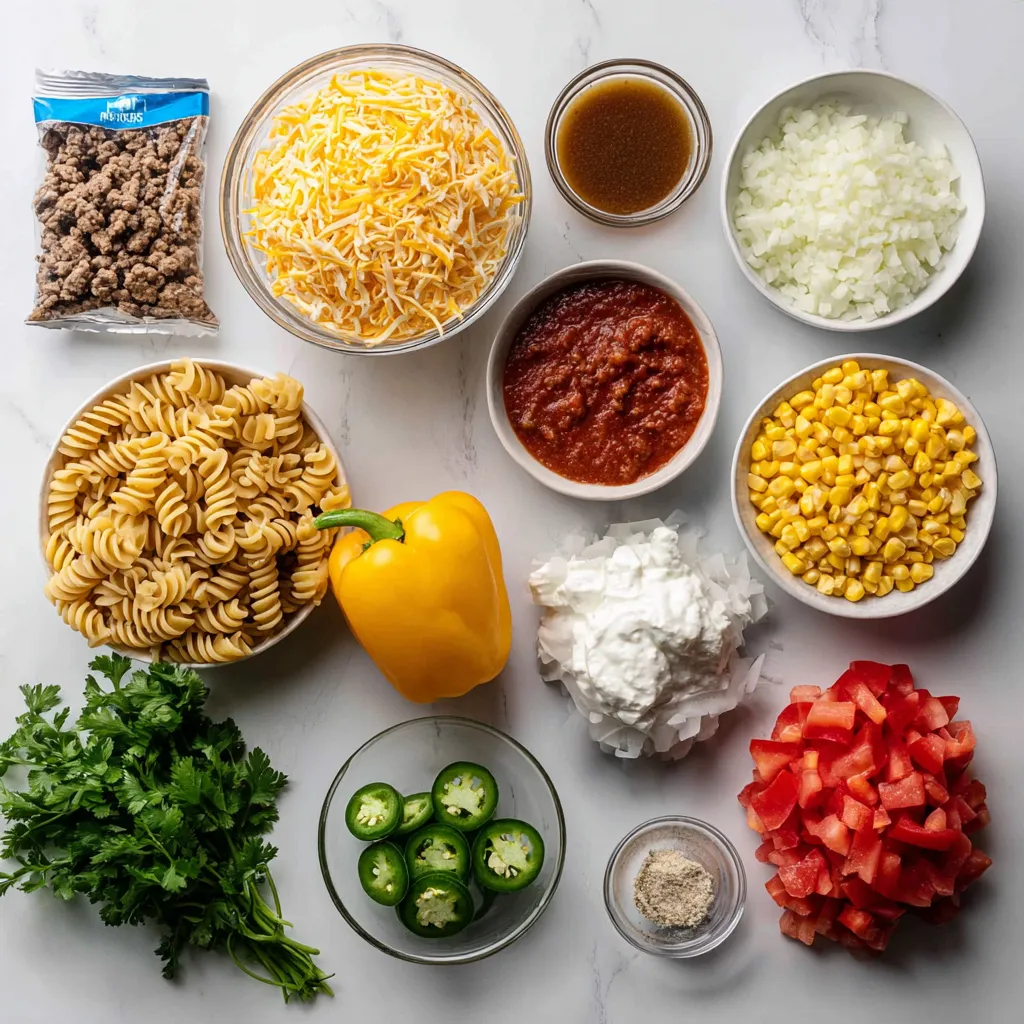
Main Ingredients
– Pasta Choices: Rotini vs. Penne
You can use rotini or penne for this dish. Rotini holds sauce well due to its twists. Penne has a smooth surface and a hollow center. Both are great, so choose what you like best.
– Protein Options: Ground Beef vs. Turkey
Ground beef gives a rich flavor, while turkey is leaner. Both options work well in this recipe. If you want a lighter meal, choose turkey. For a heartier taste, go with beef.
– Vegetables: Onion, Bell Pepper, Garlic
I use onion and bell pepper for sweetness. Garlic adds a nice kick. Diced onion and bell pepper should be added first. This way, they soften and blend with the meat.
Seasoning and Sauces
– Taco Seasoning: Store-bought vs. Homemade
You can use store-bought taco seasoning for ease. If you prefer homemade, mix chili powder, cumin, and paprika. Homemade adds a fresh touch and lets you control flavors.
– Adding Flavor: Diced Tomatoes and Chicken Broth
Diced tomatoes bring acidity and moisture. Chicken broth adds depth to your dish. Use low-sodium broth to keep it healthy. Mix these with the meat and veggies for a rich base.
– Creaminess: Sour Cream and Cheese
Sour cream and cheese make this dish creamy. I recommend using sharp cheddar for strong flavor. Stir them in at the end for a melty, rich finish. This creates that signature cheesy texture everyone loves.
Step-by-Step Instructions
Preparing the Skillet
Browning the Meat: Tips for Perfect Texture
Start by placing your ground beef or turkey in a large skillet. Use medium heat. Break the meat into small bits with a spatula. Browning adds flavor and keeps the texture just right. Once it’s fully cooked, drain any fat. This step keeps the dish light and tasty.
Sautéing Vegetables: Importance of Softening
Next, add the diced onion and bell pepper to the skillet. Sauté these for about 3-4 minutes. You want them to soften. This helps release their sweet flavors. After that, toss in the minced garlic. Sauté for another minute. It will smell great!
Cooking the Dish
Combining Ingredients: Order of Addition
Now it’s time to spice things up. Sprinkle the taco seasoning over the meat and veggies. Then, pour in the diced tomatoes along with their juices. Add the chicken broth and corn. Stir everything well. This will create a flavorful base for your pasta.
Cooking Pasta: Managing Cooking Time
Carefully add the pasta to the skillet. Stir it in so it mixes well. Cover the skillet with a lid and lower the heat to medium-low. Cook for about 10-12 minutes. Stir once in a while. This keeps the pasta from sticking to the bottom of the pan.
Final Touches
Melting Cheese: How to Achieve Creaminess
When the pasta is al dente, take the skillet off the heat. Stir in the shredded cheddar cheese and sour cream. Mix until everything is creamy and melted. This adds richness and pulls the dish together.
Seasoning to Taste: When and How
Finally, taste your dish. Season it with salt and pepper as needed. If you like heat, add some jalapeño slices. They give a nice kick. Before serving, top with freshly chopped cilantro. It adds color and freshness to your meal.
Tips & Tricks
Perfecting Your Cheesy Taco Pasta
Avoiding Overcooked Pasta: Timing Tips
To keep your pasta from getting mushy, start by cooking it for only about 10 minutes. Stir it often to prevent sticking. Check for doneness by tasting a piece. It should be firm but not hard. If you see it is almost done, take it off the heat. Remember, the pasta will keep cooking even after you remove it from the heat.
Enhancing Flavor: Alternative Spices and Add-ins
You can spice up your dish with a few easy swaps. Try adding cumin or chili powder for a deeper flavor. Fresh lime juice can add a zesty kick. You can also include black beans or diced zucchini for extra nutrition. If you love heat, toss in a few diced jalapeños. These small changes can make your meal unique and exciting.
Cooking Techniques
One-Pan Cooking: Benefits and Best Practices
One-pan meals save time and effort. You cook everything in one skillet, which cuts down on dishes. This method also allows flavors to blend well. Start with the meat, then add veggies, and finish with pasta. This order keeps your food juicy and tasty without drying it out.
Clean-Up: Minimizing Dishes with Skillet Cooking
Using one pan helps you avoid a big mess. After cooking, just let the skillet soak in warm water. You can easily scrub it clean later. If you use a nonstick skillet, it will be even simpler. This way, you can enjoy your meal without stressing over the mess.
Pro Tips
- Cook Pasta Al Dente: For the best texture, cook the pasta until it’s al dente, as it will continue to absorb flavor and moisture from the sauce while resting.
- Customize Your Protein: Feel free to substitute ground beef with ground turkey, chicken, or even a plant-based alternative for a healthier or vegetarian option.
- Add Extra Veggies: Boost the nutrition of your dish by adding more vegetables, such as zucchini, spinach, or diced carrots, along with the bell pepper.
- Make It Spicy: If you love heat, consider adding diced fresh jalapeños directly into the skillet or a dash of hot sauce to elevate the flavor profile.
Variations
Dietary Adaptations
Vegetarian Option: Replacing Meat
You can make this cheesy taco pasta dish vegetarian. Simply replace the ground beef or turkey with black beans or lentils. Both options add protein and texture. The flavor from the taco seasoning will still shine through. This swap makes the dish hearty and satisfying without meat.
Gluten-Free Pasta Choices
If you need a gluten-free option, use gluten-free pasta. Many brands offer rotini or penne that fit this need. Cook it just like regular pasta. Ensure you check the cooking time, as it may differ. This way, everyone can enjoy a tasty meal without worry.
Flavor Enhancements
Spice Levels: Adjusting Heat with Jalapeños
Want some heat? Adding jalapeños can spice up your dish. You can slice them fresh or use pickled ones for a tangy twist. Just add them while cooking or as a garnish at the end. Adjust the amount based on your spice preference. It’s a simple way to make your pasta pop.
Additional Ingredients: Black Beans, Zucchini
For extra flavor and nutrition, mix in black beans or zucchini. Black beans add creaminess and a different texture. Chop zucchini into small pieces and add it with the other veggies. This boosts the dish’s color and taste. Plus, it makes the meal even more filling and fun!
Storage Info
Storing Leftovers
– Refrigeration: Best Practices
After enjoying your cheesy taco pasta, let it cool. Store it in an airtight container. It keeps well in the fridge for 3-5 days. Make sure to label it with the date. This helps you track freshness.
– Freezing Guidelines for Future Meals
If you want to save it longer, freezing is a great option. Place the cooled pasta in freezer-safe bags or containers. Try to remove as much air as possible. It can last up to 3 months in the freezer. When ready to eat, just thaw it in the fridge overnight.
Reheating Instructions
– Methods for Best Results: Stovetop vs. Microwave
For the stovetop, place the pasta in a skillet over medium heat. Add a splash of broth or water to keep it moist. Stir until heated through. This method keeps it creamy.
For the microwave, transfer a portion to a microwave-safe bowl. Cover it with a lid or a damp paper towel. Heat in 30-second intervals, stirring in between. This way, it heats evenly.
FAQs
Common Questions
Can I use a different type of cheese?
Yes, you can! Cheddar is great, but you can also try Monterey Jack or Pepper Jack. Each cheese brings a unique taste. Experiment with your favorites for a new twist.
How long does leftovers last in the fridge?
Leftovers can last about 3 to 4 days in the fridge. Be sure to store them in an airtight container. This keeps the dish fresh and tasty for later meals.
What are good side dishes to serve with Cheesy Taco Pasta Skillet?
I recommend a simple salad or some tortilla chips. You can also serve it with guacamole or salsa for a fun touch. These sides add crunch and flavor to your meal.
Cooking Adjustments
Can I double the recipe?
Absolutely! Just double all the ingredients and use a larger skillet. This way, you can feed more people or have extra for meal prep.
What to do if the pasta absorbs too much liquid?
If your pasta soaks up too much liquid, add a bit of broth or water. Stir it in slowly until you reach the desired creaminess. This keeps your dish flavorful without being dry.
You now have a clear plan for making delicious Cheesy Taco Pasta Skillet. We covered pasta choices, protein types, and tasty veggies. You learned how to season your dish and make it creamy. I shared tips for cooking perfectly and storing leftovers.
Try different flavors and adapt the recipe to your taste. With this guide, you can impress everyone at your table! Happy cookin