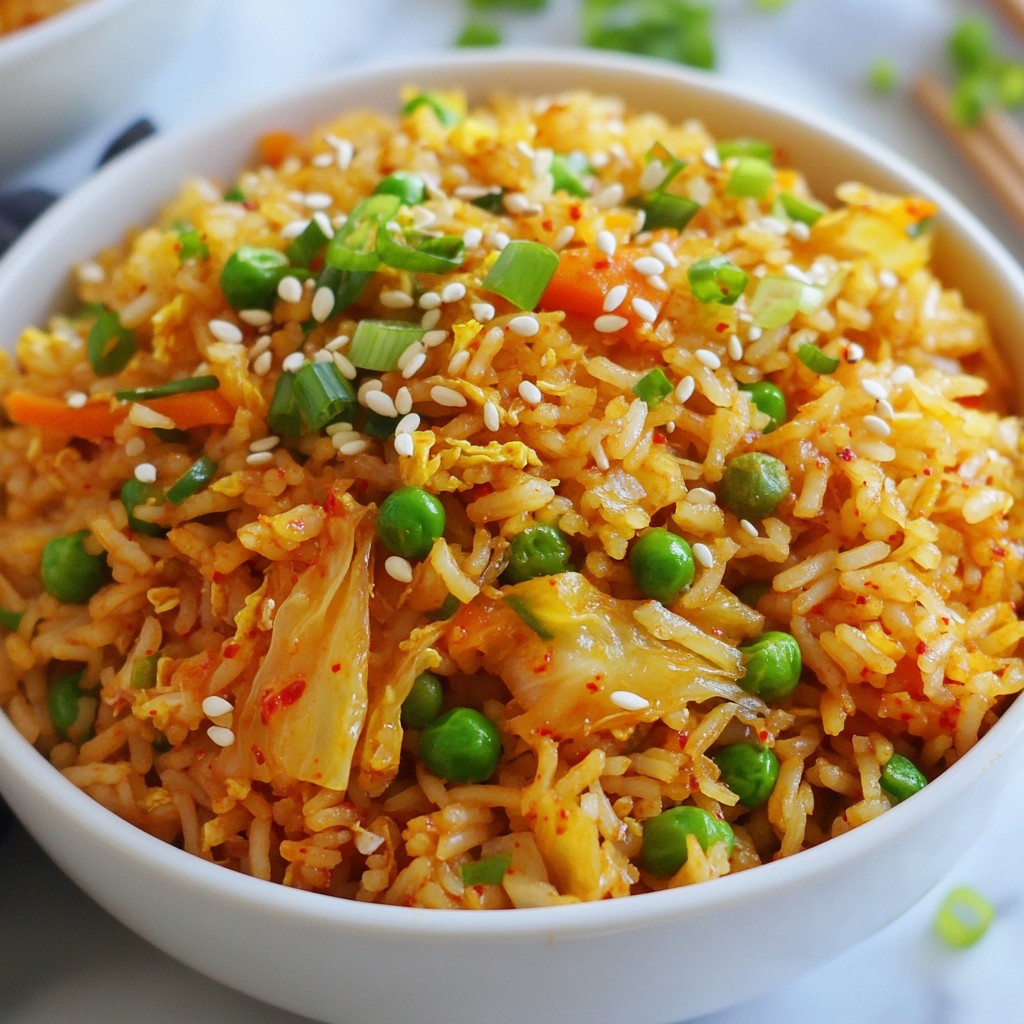
Get ready to spice up your meals with my easy Spicy Kimchi Fried Rice! This dish combines simple ingredients like day-old rice, savory kimchi, and bold sauces. Not only is it packed with flavor, but it also comes together in just one pan. Whether you're a kimchi lover or trying it for the first time, this recipe delivers warmth and satisfaction. Let's dive into how to whip up this tasty treat!
Why I Love This Recipe
- Quick and Easy: This recipe comes together in just 20 minutes, making it perfect for a weeknight dinner or a quick lunch.
- Flavorful Comfort Food: The combination of kimchi, gochujang, and sautéed veggies creates a deliciously spicy and comforting dish.
- Versatile Ingredients: You can easily customize this fried rice by adding your favorite vegetables or proteins based on what you have on hand.
- Healthy and Satisfying: This dish is packed with nutrients from the veggies and can be made healthier by using less oil or opting for brown rice.
Ingredients
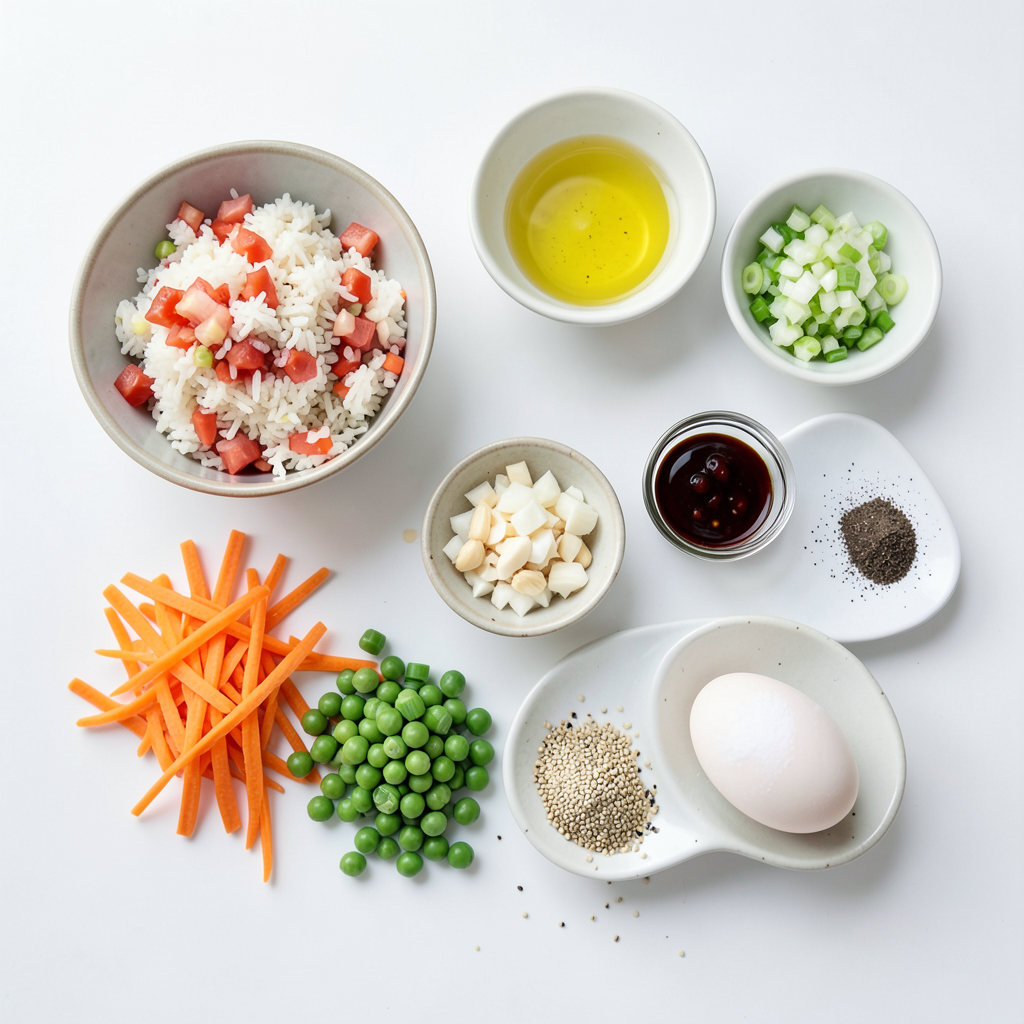
Gather these simple, fresh ingredients for your spicy kimchi fried rice:
- 2 cups cooked rice (preferably day-old)
- 1 cup chopped kimchi
- 1 tablespoon vegetable oil
- 1 medium onion, diced
- 2 cloves garlic, minced
- 1 carrot, julienned
- 1 cup frozen peas, thawed
- 2 tablespoons soy sauce
- 1 tablespoon gochujang
- 2 large eggs (optional)
- Sesame seeds for garnish
- Salt and pepper to taste
Using day-old rice helps the dish stay firm and not mushy. Fresh rice can clump together. Kimchi adds a spicy, tangy flavor that balances well with the rice. Gochujang is the magic ingredient. It brings heat and depth to your dish. Adjust soy sauce to fit your taste.
Feel free to play with the ingredients. Add more veggies or proteins if you like. Cooking is all about fun and creativity!
Step-by-Step Instructions
Preparation Steps
1. Heat oil in skillet/wok: Start by heating a large skillet or wok over medium-high heat. Add one tablespoon of vegetable oil and let it heat until it shimmers. This step helps create a nice sear on your veggies.
2. Sauté onion, garlic, and carrot: Once the oil is hot, add one medium onion, diced into small cubes. Sauté for about 2-3 minutes until the onion looks clear. Then add two cloves of minced garlic and one julienned carrot. Cook for another 2 minutes until the mix smells great and the carrot softens.
3. Stir-fry kimchi for flavor enhancement: Next, toss in one cup of chopped kimchi. Stir-fry it for 3-4 minutes. This step caramelizes the kimchi, bringing out its rich flavors.
4. Add cooked rice and break apart clumps: Now, add two cups of cooked rice to the skillet. Use a spatula to break apart any clumps. Mix well so that the rice combines with the veggies and kimchi.
Mixing Sauces
1. Drizzle in soy sauce and gochujang: Pour in two tablespoons of soy sauce and one tablespoon of gochujang. This adds a savory and spicy kick to your dish.
2. Ensure even coating of ingredients: Stir everything together thoroughly. Make sure every grain of rice and veggie gets coated in the sauces. This creates a delicious flavor in each bite.
Incorporating Peas and Eggs
1. Add thawed peas: Toss in one cup of thawed peas. Cook for another 2-3 minutes until they warm through. Season with salt and pepper to fit your taste.
2. Optional: scramble eggs and mix: If you want to add eggs, push the rice to one side of the skillet. Crack two large eggs into the cleared space and scramble them until they are fully cooked. Mix the eggs into the whole dish for added protein.
Enjoy your spicy kimchi fried rice!
Tips & Tricks
Best Practices
- Use day-old rice for optimal texture. Fresh rice can be too sticky.
- Avoid overcooking kimchi. It should remain crunchy and flavorful.
Cooking Techniques
- Adjust heat as necessary. If rice browns too fast, lower the heat.
- Season to taste with salt and pepper. This enhances the dish's flavors.
Presentation Suggestions
- Garnish with sesame seeds and green onions. This adds a nice touch.
- Serve in a large bowl or plate. It makes the dish more appealing.
Pro Tips
- Use Day-Old Rice: Day-old rice is drier and less sticky, making it perfect for fried rice. It helps achieve a better texture and prevents the dish from becoming mushy.
- Customize the Heat: Adjust the amount of gochujang to suit your spice preference. You can also add chili flakes for an extra kick or omit it for a milder flavor.
- Don’t Overcook the Veggies: Stir-fry the vegetables just until tender. Overcooking can lead to a loss of color and crunch, affecting the overall texture of the dish.
- Garnish for Freshness: Always top your kimchi fried rice with fresh green onions and sesame seeds. This adds a burst of flavor and a pop of color to your presentation.
Variations
Alternative Ingredients
You can easily change the recipe to fit your needs. If you want a vegan option, skip the eggs. Instead, add tofu for protein. You can cube firm tofu and stir it into the mix. It adds texture and absorbs flavors well.
If you need a gluten-free option, choose gluten-free soy sauce. Many brands make great substitutes that keep the taste strong. Always check labels to be sure they fit your diet.
Flavor Profile Adjustments
Want it spicier? Add more gochujang. This Korean chili paste packs heat and flavor. Start with a little more, and taste as you go. You can also add other veggies to change the taste. Bell peppers or corn can brighten up the dish.
Chop these vegetables and stir them in when you add the kimchi. They cook quickly and add nice colors.
Different Serving Suggestions
Spicy kimchi fried rice is great on its own, but you can make it even better. Pair it with proteins like chicken or shrimp. Cook these separately and serve them on top or beside the rice.
Another fun idea is to serve it in lettuce wraps. Just scoop the rice into large lettuce leaves. Then, wrap it up and enjoy a fresh bite. This makes for a fun and healthy meal option!
Storage Info
Refrigeration Guidelines
To keep your spicy kimchi fried rice fresh, store it in an airtight container. Make sure to seal it well to prevent moisture loss. You can keep it in the fridge for up to three days. After that, it may lose some flavor and texture.
Reheating Instructions
When it’s time to enjoy your leftovers, you have two great options for reheating: the microwave or the stovetop.
- Microwave: Place your rice in a microwave-safe dish. Add a splash of water to keep it moist. Cover it and heat for about 1-2 minutes, stirring halfway.
- Stovetop: Heat a skillet over medium heat. Add a bit of oil if needed. Stir in the rice and cook for a few minutes until heated through.
To keep the texture nice, avoid overheating. Stir it gently while reheating, so everything warms evenly. Enjoy your delicious meal again!
FAQs
Common Questions
Can I use fresh rice instead of day-old? Yes, you can use fresh rice, but day-old rice is best. It has less moisture, which helps prevent clumping. Fresh rice may make the dish mushy.
Is gochujang necessary for the recipe? Gochujang adds a unique spicy flavor. If you want less heat, you can skip it or use less. The dish will still taste good, but it won't have the same depth of flavor.
How can I make it less spicy? To reduce the spice, use less gochujang. You can also add more rice or vegetables. Mixing in some sugar can balance the heat, too.
Nutritional Information
- Caloric content per serving: About 350 calories.
- Macronutrient breakdown:
- Protein: 10g
- Carbohydrates: 55g
- Fat: 10g
Cooking Equipment Needed
- Recommended cookware for best results:
- Large skillet or wok.
- Wooden spatula for mixing.
- Alternative equipment suggestions:
- Non-stick pan if you don’t have a wok.
- Large pot can work, but it’s harder to stir.
This blog post walked you through the process of making delicious kimchi fried rice. You learned about the key ingredients, preparation steps, and helpful tips to get it just right. I shared ways to customize your dish and storage tips for leftovers. Remember, using day-old rice makes a big difference. Feel free to experiment with flavors and ingredients to suit your taste. Enjoy this fun and simple recipe to elevate your meals!